Fu-family illusion is a family learning that has run four generations, with its roots in late-Qing Chengdu. The great-grandmother, Madame Li, came from a salt-merchant family and learned the tangram; the grandfather, Fu Zhiqing, studied at Waseda University in Japan; and by Fu Tianzheng’s generation the two strands — illusion and the traditional puzzle games — had been drawn into a single family learning. During the war against Japan, Fu Tianzheng created Unbroken, in which a cord cut and restored again and again stood for the Great Wall; it became a piece he always performed when raising funds for the war effort.
The handwritten Letter of Acceptance of 1993 wrote Ruxianguli into this school; with her it reaches the fourth generation. The letter settled the formal standing; what actually taught her was the family. Fu Qifeng took her into the school, and Fu Qifeng’s younger brother Fu Tenglong passed the rope illusion to her with his own hands; Fu Yandong, of the same fourth generation as her, trained beside her and grew up with her. It was also on Fu Qifeng’s recommendation that Happy Valley Shenzhen, then still being built, invited her, and Fu Qifeng later helped create its show Dream Symphony.
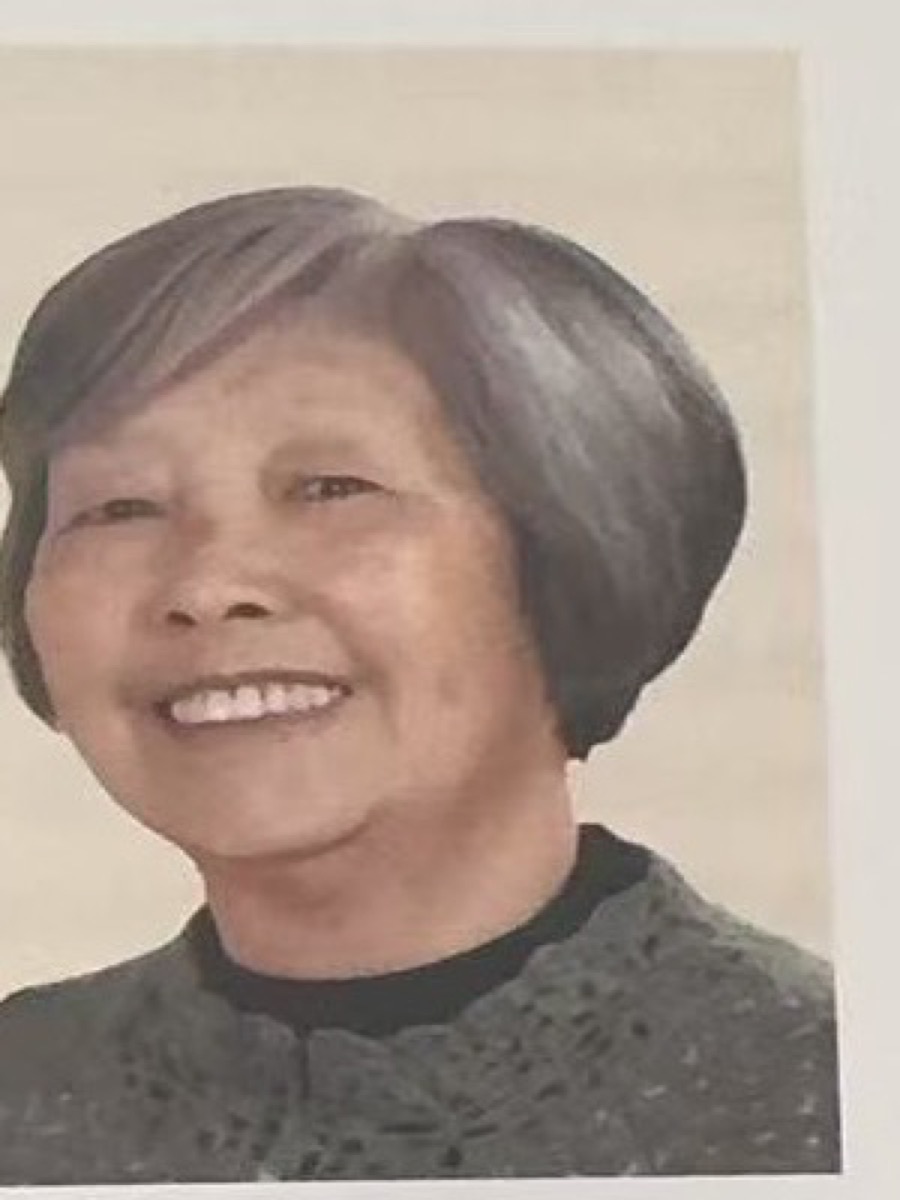
Fu Qifeng was born in Chengdu, Sichuan, in March 1939, the eldest daughter of Fu Tianzheng. On the day of her birth, air-raid sirens were sounding over Chengdu, deep in the wartime rear. The child proved unusually robust: she was speaking at eight months, and at barely two she was already on the illusion stage with her father, raising funds for the war. When she was produced from a prop made to look like a donation box, she would throw up her arm and cry “Down with the Japanese invaders!”, and the whole hall would rise with her.
From childhood she believed that illusion was not a street trick but an art with intelligence and cultural substance behind it. At fourteen she was chosen as first deputy head of the Little Companions Art Troupe at the Shanghai Children’s Palace; in 1953, after finishing junior high, she took up illusion as a profession under her father and became one of the third-generation heirs of Fu-family illusion. In 1960 the China Acrobatic Troupe brought her to Beijing as a rising star of its magic troupe, and she performed several times at Zhongnanhai.
During the three hard years the magic troupe was merged with the stage troupe and half the performers were let go; she was moved to the troupe’s archive room. Changing trade is usually a grief, but she felt little loss. The old director, A Liang, told her: “We have plenty of performers and few researchers; with your family learning, you should take up the pen.” What was meant as consolation took root in her. When her father died in 1972 with his work unfinished, the Fu siblings vowed to carry it on, and began preparing to write A History of Chinese Acrobatics.
In 1980, when the China Federation of Literary and Art Circles was setting up the China Acrobats Association, she was seconded to draft its papers — the association’s first application, its first constitution, its first work report all carry her labour. She also set up the journal Acrobatics and Magic, often carrying manuscripts to Shanghai to edit and to Tianjin to print. She edited books and journals at the association for more than twenty years, and worked in the performance, creation, study, criticism and teaching of illusion for close to seventy; she had a hand in more than forty books on the art, and her peers called her “the encyclopedia of the acrobatics world”.
Over the years she trained a number of outstanding women illusionists, among them Deng Baojin and Ruxianguli. In 1993 a handwritten Letter of Acceptance, signed and sealed by master and disciple, made Ruxianguli an heir of the fourth generation of Fu-family illusion. The letter settled the formal standing; what taught her was the family. Fu Qifeng took her into the school, and her younger brother Fu Tenglong passed the rope illusion to her with his own hands; Fu Yandong, of the same fourth generation as her, trained beside her and grew up with her. It was also on Fu Qifeng’s recommendation that Happy Valley Shenzhen, then still being built, invited Ruxianguli to join as recruited talent; she later helped create the park’s Dreamland Divine Comedy.
She told her family more than once that putting Fu-family illusion forward for the intangible cultural heritage lists was not about raising a monument to the Fu name, but about drawing recognition, care and support to illusion as a genuine part of that heritage. Fu Qifeng died on 10 July 2025.