Named to Guangdong’s 3rd cohort of Young and Middle-aged Writers and Artists of Virtue and Artistry
Guangdong's literary and art community recently held a symposium in Guangzhou to honour the third group of Guangdong Young and Middle-Aged Writers and Artists of Moral Integrity and Artistic Excellence. "Moral integrity and artistic excellence" is a very high assessment of an artist's character, artistic contribution and social influence, and an honour that every literary and art worker strives for.
The Guangdong Provincial Party Committee and the provincial government have always attached great importance to nurturing literary and artistic talent; two earlier rounds had already honoured a total of 20 young and middle-aged writers and artists of moral integrity and artistic excellence. The eight young and middle-aged artists honoured this time are all outstanding talents working on the front line of creation and performance. Chosen through wide recommendation and rigorous selection, they are models for the province's young and middle-aged literary and art workers.
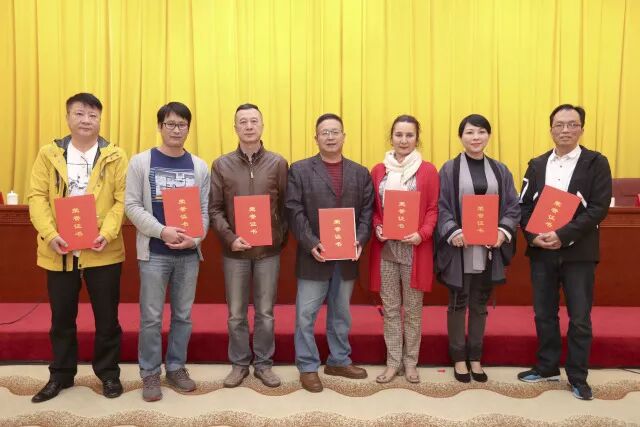
A group photo of some of the writers and artists honoured.
Photo by Li Xihua
The eight young and middle-aged artists honoured are: Cong Rong, chair of the Shenzhen Dramatists Association and playwright; Fang Tu, director of the Guangzhou Painting Academy and National Class-A Artist; Li Xinhua, Class-B playwright at the Guangzhou Literature and Art Creation Research Institute; Zhang Min, producer and director at Shenzhen Huahao Film & Television Co., Ltd.; Chen Kaibin, editor at Shenzhen Mangrove magazine and children's literature writer; Chen Qiwen, vice-chair of the Dongguan Writers Association and Class-A writer; Ruxianguli, chief magician of Shenzhen OCT Happy Valley Tourism Company; and Cui Zhenhe, deputy director of the Dongguan Cultural Centre and composer.
01
Chen Qiwen
Vice-Chair, Dongguan Writers Association; Class-A Writer
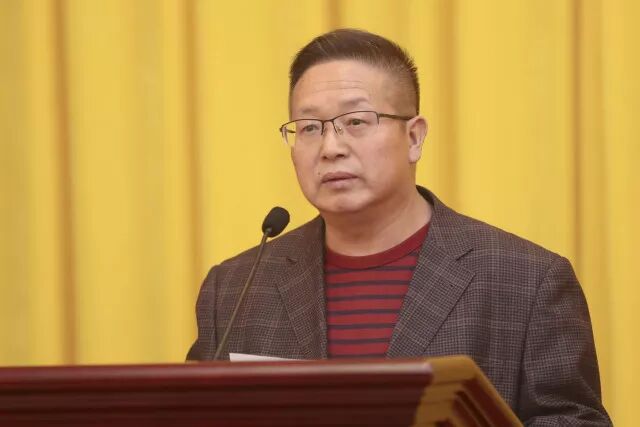
Go deep into life and grasp its essence
How does a writer go deep into life and experience it? I believe that going deep into life is conscious and clearly directed: it means carrying forward the fine tradition of the Ulan Muqir troupes, going deep into life and grasping its essence. From my own experience of reporting and writing reportage, there are three levels, each building on the last.
The first step is to reach the scene, go deep into life and seek the truth of existence. To write "Up and Down the Great River" I travelled to the source region of the Yellow River and climbed the snow-capped mountains and glaciers of the Qinghai-Tibet Plateau. In the bitter cold and thin air my head was splitting; a gale suddenly rose and a blizzard swept in and engulfed everything, plunging me in an instant into a world of ice and snow. I still do not know how I got through it. Yet compared with those who keep watch at the source of the Yellow River, what was that worth?
The second step is to experience life. Without going deep there is no experience. At the Madoi Hydrological Station at the source of the Yellow River I interviewed Xie Huigui, a hydrologist who had held his post for more than thirty years in that forbidden zone for life. What interested me was not why he had become a model worker, but how a person survives at the extreme limits of the environment. When I blurted out that foolish question, his weather-darkened face twitched involuntarily and then, rarely, broke into a smile: "Don't ask me how I got through it; ask me how I stayed alive."
The third step is to reflect on life. At the Longyangxia water control project, the first gorge on the upper Yellow River, there is a martyrs' cemetery called Huluyu. The commander at Longyangxia was an old soldier. On arriving he walked straight into Huluyu, looked around in silence for a while and said, "This is the place!" His companions thought he was looking for a campsite; only later did they learn he was looking for a burial ground. Once again I thought about fate, and came to understand the lives of ordinary people. These things became profound plots and moving images.
I know well how slight my own strength is, but in conduct and in writing I set out from "extending innate knowing," and "extending" is itself a process of both knowing and acting. I will spare no effort to create fine works worthy of the new era.
02
Li Xinhua
Class-B Playwright, Guangzhou Literature and Art Creation Research Institute
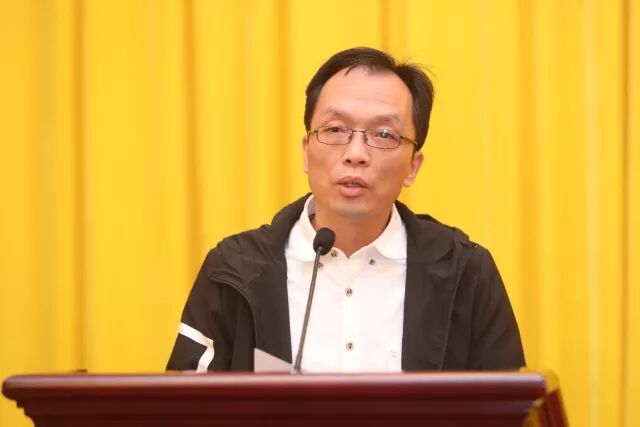
Create works of art with warmth and depth
Looking back on my work over these years, I have followed the requirement of a "people-centred orientation in creation" and established the creative principle of "writing Guangdong figures, telling China's stories." For more than a decade I have stayed on the front line of writing, rooted in Lingnan, and have written more than twenty large-scale stage scripts, bringing sages of Guangdong such as Kang Youwei, Liang Qichao and Zhan Tianyou into my scripts, and contemporary figures such as Zhong Nanshan as well, and taking these works onto the national stage.
I set up the creative principle of "writing Guangdong figures, telling China's stories" because I do not believe Guangdong's stages must forever tell other people's stories, nor that our stages must forever present emperors and generals, scholars and beauties. Still less do I believe that Guangdong's own playwrights cannot write stage scripts that have both local character and a sense of family and country.
I know clearly that the land beneath my feet has been a great stage of history in modern times, one of the red centres of the Great Revolution period, and a frontier of reform and opening up; it has never lacked subjects for praising the Party, the country, the people and heroes. We have the duty, the obligation and the ability to write about, praise and celebrate those who once worked and struggled on this land. I firmly believe that this fertile ground of Guangdong can produce works of art with warmth and depth; I firmly believe that Guangdong's playwrights can create dramatic works with backbone and feeling.
03
Ruxianguli
Chief Magician, Shenzhen OCT Happy Valley Tourism Company
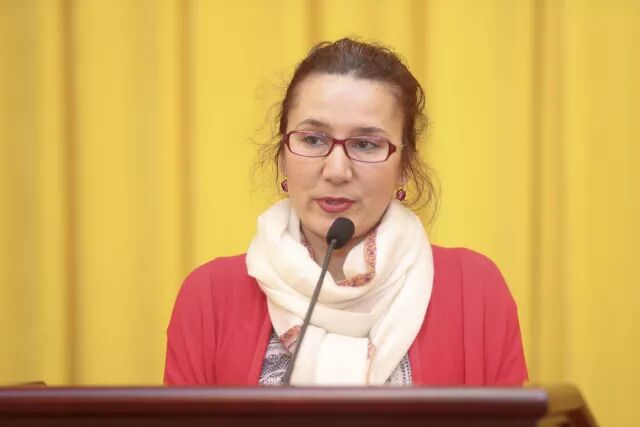
Strengthen Guangdong's voice in the international circus-arts world
Acrobatics is a visual and aural art that is direct and vivid, widely disseminated and popular with the public; in terms of the public's willingness to take part, it has advantages no other art form can match. On that basis, standing on the platform of our province's highly developed acrobatics sector, I am committed to carrying the art forward and bringing joy to the public. This year the Guangdong Acrobats Association, working around major occasions such as the 20th anniversary of Hong Kong's return and the 90th anniversary of the founding of the army, and themes such as the establishment of the Guangdong-Hong Kong-Macao Greater Bay Area, the "Belt and Road" initiative and cultural exchange among Guangdong, Hong Kong, Macao and Taiwan, carefully planned and staged dozens of events with a direct audience of 500,000. At the same time, following the trend of the rapidly developing internet, we have worked with CCTV and with new media such as Sina, Baofeng and Huajiao, further broadening our audience and raising the influence of acrobatic art.
Circus, magic and comedy operations in Guangdong's acrobatics world already run on a considerable scale. The China International Circus Festival hosted by Chimelong Circus has global influence, and the world's top acrobatic acts come to perform there; Happy Valley is built on magic and comedy, and its level of industrial operation is among the best in the country. We already have a solid foundation, and now, as a new era of flourishing socialist culture arrives, we will use the platform of the cultural industry to further raise the influence of Chinese acrobatic art. By staging events with international influence we will keep improving our originality and competitiveness, and keep strengthening the voice and leading role of Guangdong's magic and comedy sector in the international circus-arts world.
04
Fang Tu
Director, Guangzhou Painting Academy; National Class-A Artist
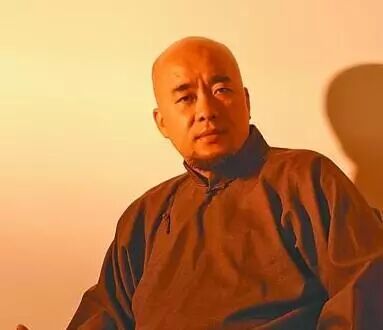
Shouldering a mission, caring about reality (by Zhang Gong)
Fang Tu, director of the Guangzhou Painting Academy, is a painter. He excels at freehand bird-and-flower painting, figure painting, landscape painting and experimental ink. His works were selected for the 8th, 9th, 10th and 12th National Art Exhibitions and other major domestic exhibitions and won awards on many occasions; they are held by institutions including the National Art Museum of China, the China National Academy of Painting, the Guangdong Museum of Art, the Guangzhou Art Museum and the Asia Museum of Art in South Korea. He has published more than twenty personal painting collections and held more than ten solo exhibitions.
Fang Tu is a painter with a sense of social responsibility. In recent years, in the course of setting up the Guangdong Chinese Painting Society, he has shown organisational ability and respect for his elders and betters, which is another reason he is admired. Chinese painting has always valued transmission, and learning from and inheriting the previous generation is an important factor in its development. As executive president of the society, Fang Tu has actively planned and organised a number of fairly large academic events, effectively drawing attention to Chinese painting; he has won the approval of older-generation painters in particular, and the support of Chinese painters across the country.
Second, Fang Tu attaches importance to cultivating young art talent. With the strong support of Yang Xiaoyang, president of the China National Academy of Painting, he proposed and brought about the "Guangzhou National Young Sprout Painter Cultivation Programme," founded jointly by the China National Academy of Painting, the Guangzhou Painting Academy and the Guangzhou Academy of Fine Arts, and devoted a great deal of time and energy to carrying it out. A group of painters from "Young Sprout, Phase One" has now graduated with excellent results; the programme has not only been highly recognised by the China National Academy of Painting but also praised by the leadership of the Guangdong Provincial Party Committee and promoted throughout the province's literary and art circles.
Fang Tu has been director of the Guangzhou Painting Academy for twelve years. The academy has now moved into new premises, built after years of his effort, greatly improving the painters' working environment. Under his leadership, its painters have achieved good results in a succession of important art selections, including the 10th to 12th National Art Exhibitions, the China Jinling Hundred Artists Painting Exhibition, the National Major Historical Themes Art Creation Project, the Five Thousand Years of Chinese Civilisation Art Creation Project and the Belt and Road International Art Creation Project.
At the same time, as an accomplished painter, Fang Tu has ideas and drive. In the 1980s and 1990s he and a group of young artists from around the country threw themselves into experimental ink in Chinese painting and achieved a good deal, producing works such as "Heaven and Earth · Series" and "IT Molecules · Series," which were collected by many art museums at home and abroad. Over the following decade or more he organically combined the traditional brush and ink of Chinese painting with experimental ink and opened up a new path, producing a large body of work full of concern for reality, such as "Friends of Mankind," "Army Kids Series," "The Village Carpenter," "Years Like a Song" and "Future Warrior," which have been widely recognised. The art critic Zhu Wanzhang said: "In Fang Tu's figure paintings, dense ink brings out the weathered gravity of his subjects and their sense of the times. He pays attention to the form of the figure, but pays even more attention to the spirit beyond the form. Whether it is the vicissitudes of a soldier, the plainness of a Tibetan, or the traditional-flavoured broadmindedness of a lofty scholar, all leap off the paper in full measure."
As director of the Guangzhou Painting Academy, Fang Tu holds that for every artist, caring about society, history and politics is a principle of artistic creation, and that this principle is precisely the fine tradition of Guangdong's art workers. Fang Tu said: "I will hold still more firmly to the cultural confidence of carrying forward traditional Chinese painting, always take promoting the flourishing of socialist culture as my own duty, and pursue cultural innovation in practice."
05
Cui Zhenhe
Deputy Director, Dongguan Cultural Centre; Composer
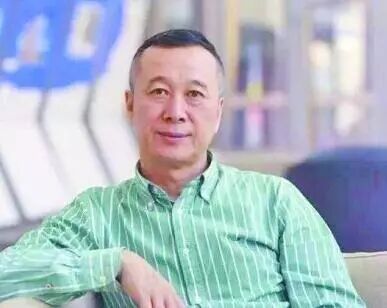
Writing songs with a distinctive Lingnan character (by Wang Qi)
Cui Zhenhe is a National Class-A composer and music producer, a recipient of the State Council's special government allowance, a member of the China Musicians Association and of its Creation Committee, vice-chair of the Guangdong Musicians Association, and deputy director of the Dongguan Cultural Centre.
Cui Zhenhe has been composing since 1983 and over the years has carefully written more than 300 works of various kinds, including vocal music, instrumental music, opera and quyi. His main works include "The Father Who Sings Uqin," "The Legend of Sarilang," "Father's Grassland" and "Dream of the Strait." He has won the Outstanding Work Award of the 9th and of the 11th "Five-One Project" of the Publicity Department of the CPC Central Committee, first prize in the National Outstanding Pop Song Composition Competition, and, on many occasions, the Ministry of Culture's Qunxing Award, Gold Award and Qunxing Grand Award.
Cui Zhenhe's songs have strong artistic appeal and vitality; their thought and artistry bear the marks of their time while transcending its limits. He has kept persistently to the road of creation and innovation, showing dedication and love for his work. In more than thirty years in music he has gone deep into countless villages and neighbourhoods across the country and recorded more than a thousand folk songs, song-and-dance pieces, instrumental works, narrative-singing music and opera music of many ethnic groups; on that basis he has reworked and innovated, producing a large body of widely loved ethnic music.
His music has superb expressive power and a noble character; whether instrumental works or pop songs, all are distinguished by colour and win through economy of means. He has long worked to bring traditional folk music onto larger stages. After coming south from the black earth to Guangdong, he plunged into writing music with a Guangdong character. In his view, art has value only if it has character; a creator living in Lingnan should write works with a distinctive Lingnan character, and that is a duty.
Cui Zhenhe is a man who innovates and searches without stopping. Every piece flows freely and is full of feeling, yet never shows off; the craft reflects a sincere heart. His music embodies the true, the good and the beautiful. True, in that he never tells a lie in music. Music reflects a person's soul most truthfully. Cui Zhenhe is like a pure crystal: there is no impurity in his music, only the outpouring of the soul. Good, in that his heart is good. Music is written for the good of humankind, and his works are full of human kindness and care. Beautiful, in that his music is full of beauty. Whether modern Western technique or elements of Chinese music, he can fuse them organically. Without the experience of life there is no impulse to create; without the impulse no good inspiration is sparked; and to shape it all into a song in the end takes technique.
The world is noisy everywhere, but one can be still anywhere. Untouched by the noise of the world, Cui Zhenhe tills his own fertile ground in the quiet field of his heart.
06
Chen Kaibin
Editor, Shenzhen Mangrove Magazine; Children's Literature Writer
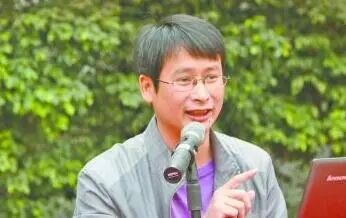
The fairy tale, a posture of life and a philosophy (by Feng Zhen)
Chen Kaibin (pen name Chen Shige) is a member of the Children's Literature Committee of the China Writers Association. He graduated from the Chinese Department of South China Normal University in 2003 and began publishing fairy tales in 2009. In 2013 "The Street Where the Wind Lives" won him the 9th National Outstanding Children's Literature Award by unanimous vote, making him the first writer born in the 1980s in China to receive the country's highest award for children's literature. In 2017 he won the gold award of the first Guangdong Children's Literature Award and was named one of the third group of Guangdong young and middle-aged writers of moral integrity and artistic excellence.
In Chen Shige's fairy tales we see a vision directed towards a noble spirit of freedom, and a different image of the "king." Chen Shige's tales give the image of the "king" a wholly new meaning: he stands for a person's grasp and mastery of the self, a subject who is confident, wise and sensitive, who looks up at the stars and down at the earth, and who merges self with nature and the individual with all things. It is the complete awakening of self-awareness, an unrestrained and free experience of life, a pursuit of the state in which heaven and humanity are one, a way of writing the spiritual history of an individual life, and also a way of getting along with this complicated real world. Thus in Chen Shige's tales the king is a child, and the kingdom is everyone from 0 to 99 who still has a childlike heart and still longs for a pure life. Short tales of his such as "Where Is the Sea" and "The King's Treasure" all display this unfettered, easy spirit. One might say the image of the "king" is a keyword for reading Chen Shige's work, or a password for entering the world of his texts.
Not only in his short pieces: his representative full-length tale "The Book of Fairy Tales" also displays this search for an unfettered, easy spirit. In "The Book of Fairy Tales" he explores a very interesting question: what is a child, and what is a kid. In Chen Shige's view, "child" is a physiological concept: a person cannot become a child again, but can become a kid again. By "kid" he means the original human being, one with a gentle, humble, forgiving and patient heart, who loves things directly rather than merely holding a concept of them. As long as a person has these qualities, even at ninety he is a kid.
In Chen Shige's view, fairy tales are not only for children; adults seem to need them even more. To believe in fairy tales means that adults may live through a second childhood. He leads the fairy tale towards depth and breadth, forcefully breaking through the self-enclosed traditional standards that fenced the genre in, and extending the fairy tale along the dimension of a philosophy of life into the realm of poetry.
07
Cong Rong
Chair, Shenzhen Dramatists Association; Playwright
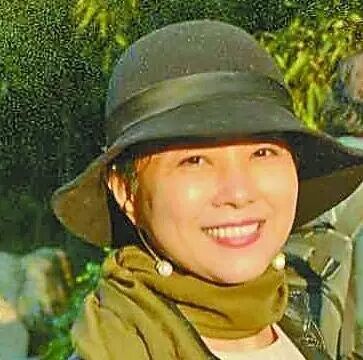
The spirit of both maker and knight-errant (by Qingxin)
Cong Rong was born into an artistic family known for both character and art, and grew up steeped in art; with innate artistic gifts and hard work of her own she made an immediate name for herself in Shanghai's theatre world as a promising newcomer. Her first stage play, "The Conception of Love," was produced by the Shanghai Youth Spoken Drama Troupe and then performed in succession by many companies and universities across the country, with the noted actors Lou Jicheng and Li Yuanyuan in the leading roles. Reporters of every kind came to interview and write about it, and it was called one of the representative avant-garde plays of the 1980s.
Cong Rong, a name rich in meaning. Zhang Jiasheng said of her: "Talented people are not necessarily kind, but Cong Rong is kind; kind people are not necessarily talented, but Cong Rong is talented." She herself once said: "My heart is composed, for the sake of theatre." I feel that in Cong Rong there is the spirit of both a cultural maker and a knight-errant: she is a loud advocate for Shenzhen's cultural construction and a tireless practitioner. She has campaigned for Shenzhen to establish an archive of its migrants, so that later generations may understand how Shenzhen, then a small fishing town, grew into a first-tier Chinese city. Shenzhen is a city of migrants; preserving the feelings of those who built it and building the citizens' sense of belonging to Shenzhen as a home is also a way of respecting and passing on the Shenzhen spirit.
When Cong Rong served as artistic director and chief writer of the large-scale music-and-poetry recital "At the Window of the Republic," she sought novelty without cliché and broke through the rigid old model of simply setting a poetry recital to music. The evening used multimedia and instruments such as violin and erhu; folk singers sang the poems; dancers danced; poetry and drama were blended together into a perfect unity. Sound, music, dance, drama and scenery on stage set one another off and formed an organic whole, turning a poetry recital into an artistic gala performed across many media, so that the audience felt the beauty and impact of art through both ear and eye.
Many in the audience exclaimed that a poetry recital evening turned out to be not only about listening to poems, but also about enjoying music and watching drama, a feast for both eyes and ears, and a baptism of the soul in the light of art. This was Cong Rong's first cross-disciplinary exploration and artistic breakthrough, and it was a great success, exerting an important influence on how poetry is disseminated and on the diversification of its stage forms. China Central Television sent staff to Shenzhen to record the recital as the television arts programme "Shenzhen People," which was broadcast several times on CCTV's arts channel during the national "two sessions" in 2001 and repeatedly on arts channels across the country, creating a new form of poetry evening in China. Afterwards the form of the large-scale music-and-poetry recital "At the Window of the Republic" was imitated all over the country and became an artistic benchmark.
08
Zhang Min
Producer and Director, Shenzhen Huahao Film & Television Co., Ltd.
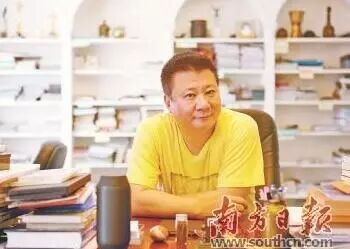
Holding to realism amid creative diversity (by Fu Yin)
Zhang Min (stage name Zhang Wei) is an independent filmmaker. From 2006 to 2010 he took advanced courses in the directing and literature departments of the Beijing Film Academy and in art and culture studies and film studies at the Chinese National Academy of Arts. Zhang Wei has directed five realist feature films on widely differing subjects. He is good at catching stories from current news and then, through artistic filtering and aesthetic weaving, raising them into film narratives of artistic quality and social value. His films are not only fully and reasonably dramatic; while colliding with the contradictions of social life they also show the light of humanism, carrying meaning through light and shadow and setting down a record of the times.
Zhang Wei's 2010 debut, "Beijing Grassland," takes the viewpoint of an African boy living in Beijing and, with a distinctive camera language, transforms the city's bustling urban forest into the vast African grassland, telling of the boy's dreams and life in Beijing. In 2011 Zhang Wei made the film "One Man's Shadow Play," the first fiction feature to portray the real difficulties of shadow-puppet art, in which an old shadow-play artist, swelling gradually amid cheers and applause, finally finds that he must face the truth. In 2014, "Factory Boss," set against the state of enterprises in the Shenzhen Special Economic Zone over more than thirty years of reform and opening up, tells the story of a Shenzhen private entrepreneur and reflects the difficulties such entrepreneurs face, including competition and the global economic crisis. His 2016 film "Xi He" turned its attention to the family of an autistic child, telling of a mother's hard struggle to get her autistic son into school and to change her own fate.
In 2017 Zhang Wei made the film "Dream of Heavenly Sounds," which tells of four blind Tibetan children who set out from a small village at the foot of Mount Everest on an adventurous journey to perform on Shenzhen Television's "Dream of Heavenly Sounds" programme. It is worth noting that the film is not only based on a true story but also features many blind teachers and students from the schools for the blind in Lhasa and Gyantse in Tibet playing themselves.
Zhang Wei's filmmaking is consistent in style: he mostly uses a realist touch and a documentary-like manner to depict the relationship between marginal groups and society. Speaking of what he insists on in scriptwriting, Zhang Wei said he keeps to the qualitative research methods of sociology and anthropology, going deep into the communities his films focus on through extensive fieldwork and in-depth interviews, so as to understand from their own point of view a kind of life that ordinary people do not know. This may not suit the fast-food consumption habits of today's film world, but Zhang Wei does not mind; he says he is simply doing his best to make the films he wants to make.
The film critic Wang Zun said: "Zhang Wei's films have a very particular feel. The stories and characters cling closely to reality and have a documentary-like factuality; they come from reality and do not avoid social problems, and at the same time they manage to avoid preaching, presenting reality objectively and calmly." In recent years Chinese art-house filmmaking seems to have shown some tendency to return to auteur cinema. The auteur label attached to Zhang Wei fits his creative attitude towards realist subjects. He offers neither top-down onlooker's pity nor the joys and sorrows of marginal groups as a commodity; rather, as a film artist, he takes the posture of entering other people's lives and living alongside them. Because they are true enough, Zhang Wei's films can be accepted by a wider public, and several have won awards at major international film festivals.
Content | Based on Nanfang Daily
Editor | Tao Mingxia
Planning | Li Pei
Photos | Li Xihua (some provided by the subjects)
If you like this article, feel free to forward and share it with friends
Looking back at Art Views:
The 13th Guangdong Arts Festival closes, and the award list is out
The Guangzhou Symphony Orchestra turns 60; some say having it is Guangzhou's good fortune
This year's Guangzhou Jazz Festival has a Grammy-winning diva on the bill, with tickets from as little as 80
Want to see the world's finest theatre? It's at the Guangdong International Theatre Exhibition
He paints modern landscapes from the river waters and seascapes of Guangzhou
Jiang Shuzhuo: after 30 years in Guangzhou, he has finally found his own spiritual settling place